
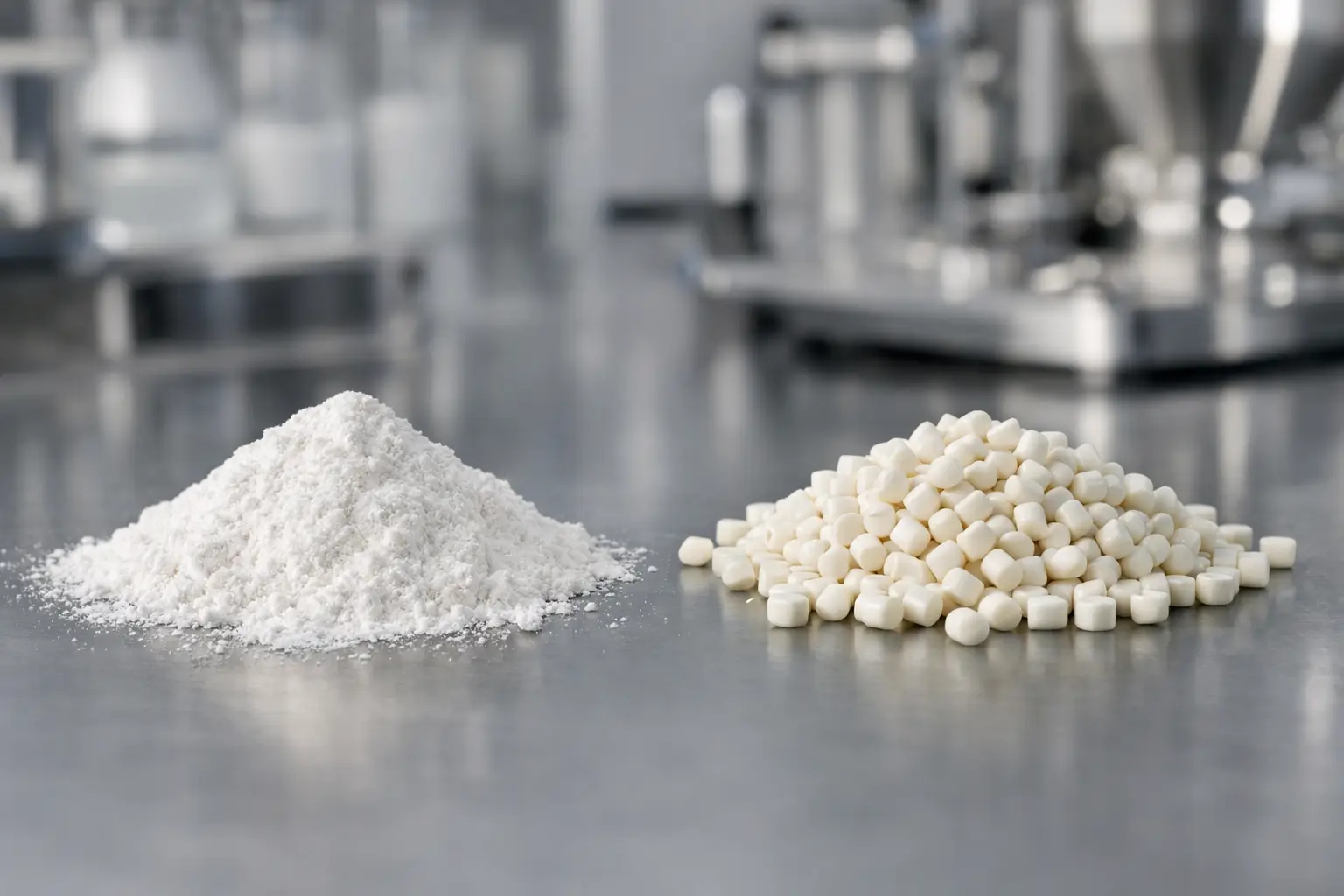
If you are choosing between powder vs pellet compounds, the right answer usually comes down to one thing – how you actually handle material in your setup. Buyers often start with the compound name and purity, but format matters just as much once it reaches the bench. The difference affects measuring, storage, consistency, transport, and how much room there is for avoidable handling errors.
For experienced buyers, this is less about preference and more about process. Some want full control over quantity and preparation. Others want a cleaner, faster format that reduces repeat handling. Both approaches have clear advantages, and both can be the wrong choice if they do not match the way you work.
Powder vs pellet compounds at a glance
Powders are usually the more flexible format. They suit buyers who want variable quantities, direct weighing, and greater freedom in how material is portioned for research use. If your process relies on precise scale-based handling and you are comfortable working with loose material, powder often makes more sense.
Pellets are usually chosen for convenience and consistency of unit size. They appeal to buyers who want a pre-formed format that is easier to handle, simpler to store in portions, and less messy during routine use. That does not automatically make pellets better. It just means they can be more practical in the right context.
The real comparison is not loose material versus solid units in abstract terms. It is control versus convenience, adaptability versus simplicity, and open-ended handling versus pre-portioned structure.
When powder compounds make more sense
Powder remains the default choice for many informed buyers because it gives maximum control. You are not locked into fixed units. That matters if your work requires variable amounts, custom preparation, or exact measured handling using calibrated equipment.
Another practical advantage is product density and packaging efficiency. Powders can often be packaged compactly, and for some buyers that helps with storage. Depending on the specific compound, powder may also be the more familiar format in the market, which can make comparison shopping simpler when reviewing price against stated quality.
There is a trade-off, though. Loose powder requires more care at every step. Measuring needs proper equipment, a stable work surface, and attention to environmental factors. Static, residue, humidity, and transfer loss can all create minor inefficiencies. None of that is unusual, but it does mean powder demands a more disciplined routine.
For some customers, that is not a drawback. It is the reason they choose it. If you want direct control and do not mind the extra handling, powder is usually the stronger option.
Accuracy depends on your equipment
People often assume powder is automatically the most accurate format because it can be weighed freely. In practice, that only holds up if your equipment and handling are good enough. A poor scale, rushed measuring, or inconsistent technique can wipe out the advantage very quickly.
That is why powder suits buyers who already have a reliable process. If your setup is organised and repeatable, powder gives you flexibility without forcing you into fixed portions. If your setup is less controlled, the theoretical accuracy may not translate into actual consistency.
Where pellet compounds have the edge
Pellets solve a different problem. They reduce handling friction. Instead of working with loose material each time, you are dealing with uniform individual units. That can make routine management faster and cleaner, especially for buyers who value convenience and less bench mess.
From a storage perspective, pellets are often easier to separate, count, and keep orderly. There is less chance of loose residue spreading during handling, and the format tends to be more straightforward for buyers who do not want repeated weighing steps. That simplicity is a large part of the appeal.
Pellets can also feel more predictable in day-to-day use because each unit is manufactured to a set size. Again, that is not the same as saying they are right for every case. Fixed units are useful only if those unit sizes fit the way you intend to handle the compound. If you need variable quantities or bespoke preparation, the pellet format can become restrictive rather than helpful.
Convenience has a trade-off too
The main compromise with pellets is reduced flexibility. You are working within pre-set units rather than free measurement. For some buyers, that makes the process cleaner. For others, it removes too much control.
Price can also be viewed differently depending on the format. A pellet may look convenient, but buyers comparing value often need to think beyond simple pack pricing. The better choice is not always the cheapest upfront option. It is the one that best fits your actual use pattern while keeping handling straightforward and waste low.
Handling, mess and day-to-day practicality
This is where the powder vs pellet compounds question becomes much more practical. Powders can be efficient, but they are inherently more exposed during handling. Opening, weighing, transferring, and resealing all create opportunities for loss, contamination, or simple inconvenience.
Pellets reduce much of that friction. They are generally easier to move, easier to separate, and easier to store without repeated contact with the raw material. If discretion, speed, and low-mess handling are priorities, pellets often come out ahead.
That said, buyers who are already comfortable handling powders may not see this as a major issue. What feels messy to one customer feels routine to another. The correct format depends on how often the material will be handled and how much effort you want each step to require.
Storage and transport considerations
Storage is not just about space. It is also about keeping the format stable, identifiable, and easy to manage over time. Powders usually need a bit more care around sealing, moisture exposure, and clean transfer when reopened. Pellets are often simpler to keep separated in known quantities without repeated weighing.
For transport and short-term movement, pellets also tend to be easier to manage because they are less prone to dispersal if packaging is opened. Powders demand more caution. That is not a flaw in the format. It is simply part of dealing with loose material.
Buyers who place a premium on discreet, straightforward storage often prefer a format that reduces unnecessary handling. That is one reason pellet options continue to appeal to customers who want a more convenient purchasing experience from checkout to delivery to storage.
Which format suits different buyer types?
If you are the kind of buyer who compares compounds by specification, keeps proper weighing equipment on hand, and wants full control over quantity, powder is usually the better fit. It rewards a careful setup and gives you more freedom in how material is managed.
If you prefer a simpler process, cleaner handling, and less repeated measuring, pellets are often the smarter buy. They remove steps, reduce mess, and make routine use more straightforward. For many customers, that convenience is worth more than the flexibility they give up.
There is also a middle ground. Some buyers use powders for compounds where variable handling matters and pellets for products where ease and consistency matter more. That approach makes sense if you are buying by use case rather than sticking to one preferred format across the board.
What to check before you buy
The format alone should never be the only decision point. Product quality, batch consistency, packaging standards, and supplier reliability still matter first. A well-presented pellet is not useful if the underlying quality is poor, and the same goes for powder.
It is worth checking how the product is described, how clearly the format is specified, and whether the supplier presents the item in a way that supports confidence. In a market where privacy, delivery speed, and consistency matter, the basics still count. Clear listings, dependable fulfilment, discreet packaging, and tested quality do more to support a good purchase than any format preference by itself.
That is why buyers who know the market tend to look at format as part of a wider decision. The smart question is not simply powder or pellet. It is whether the format matches the way you handle material and whether the supplier can be trusted to deliver exactly what is advertised.
Final thoughts on powder vs pellet compounds
There is no universal winner in powder vs pellet compounds because the better format depends on how much control you need and how much convenience you want. Powder gives flexibility and direct measurement. Pellets give cleaner handling and easier routine management. If you buy with your actual process in mind rather than chasing assumptions, you are far more likely to end up with a format that works properly from the moment the order arrives.

