
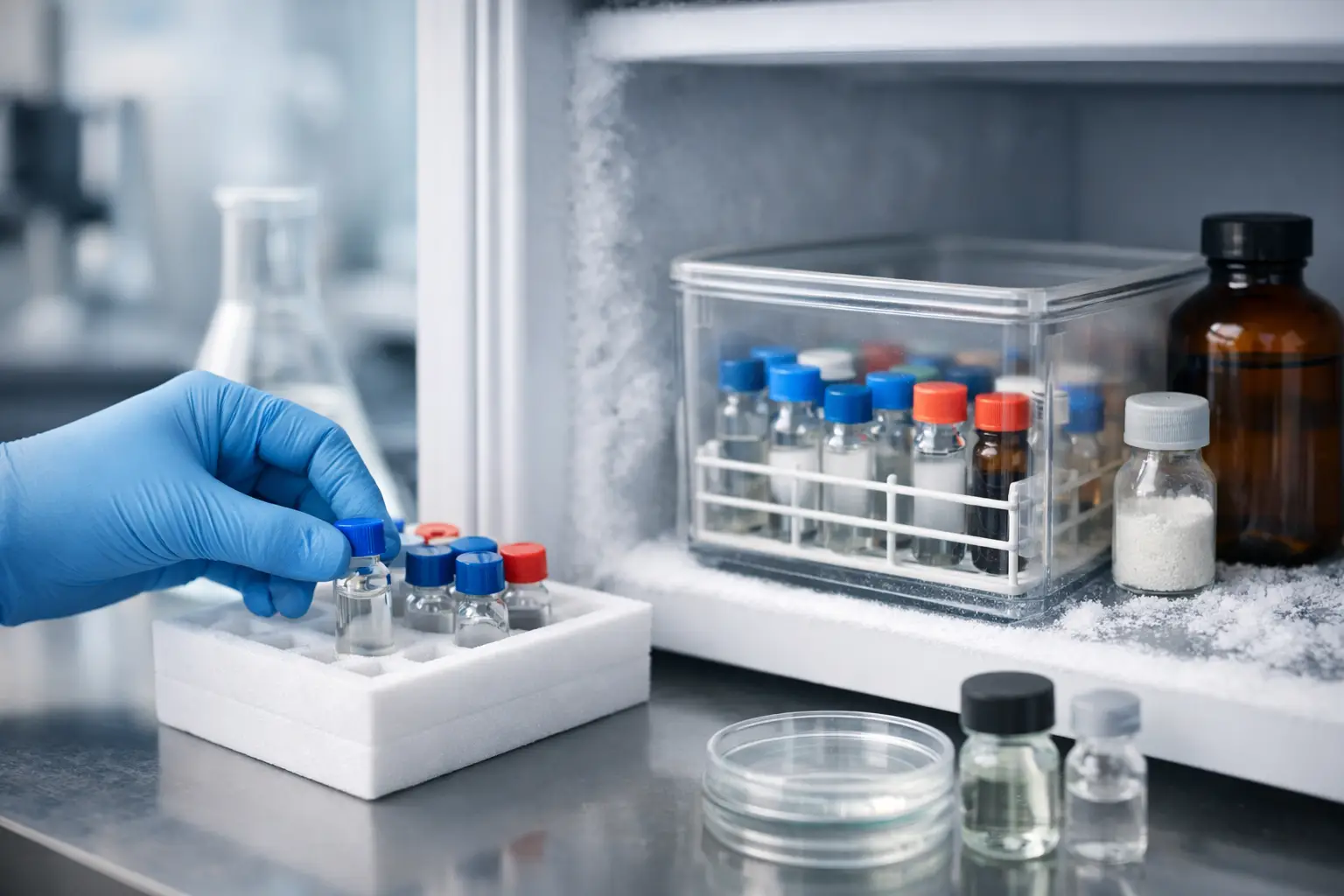
A compound can arrive in excellent condition and still degrade quickly if it is stored badly for a week. Heat from a radiator, moisture from a bathroom cabinet, or repeated opening of the same bag is often enough to reduce stability. If you are looking up how to store research compounds, the real goal is simple – protect quality from the moment the package lands.
For most buyers, storage is less about laboratory perfection and more about avoiding basic mistakes. Powders clump, pellets absorb moisture, liquids oxidise, and labels go missing. Once that happens, you are left guessing about identity, age and condition, which is a poor position for any serious research use.
How to store research compounds without avoidable loss
The best storage setup depends on the form of the material, the expected storage period and how often it will be handled. A sealed blister pack is different from a hygroscopic powder. A peptide usually needs more care than a stable crystal. There is no single answer that covers every compound, but there are clear rules that reduce risk across the board.
Start with the three main threats: heat, light and moisture. These are the most common causes of avoidable degradation in home and small-scale research storage. Air exposure matters too, especially for compounds that oxidise or pull water from the atmosphere, but air is usually managed by choosing the right container and opening it less often.
Temperature control should be boring and consistent. A cool, dark cupboard is often better than a warm room with daily swings in temperature. If refrigeration is needed, it should be deliberate rather than casual. Moving compounds repeatedly between warm and cold conditions can create condensation, and condensation is where a lot of problems begin.
Choose the right container first
Bad storage often starts with bad packaging decisions. Leaving a material in a flimsy zip bag after first opening may be convenient, but it is rarely ideal for long-term stability. If the original packaging is high quality and heat-sealed, keeping the material in that packaging for as long as possible is usually sensible.
For powders and crystals, airtight glass containers are generally preferred when practical. Glass is less reactive than many plastics and offers better odour and vapour control. Amber glass helps with light-sensitive materials. If you are storing only small amounts, smaller containers are often better than one large jar because you reduce how much material is exposed every time you open it.
Pellets, capsules and blistered products are often easiest to manage because each unit is already separated. The mistake here is removing them from original packaging too early. If they are individually sealed, leave them that way until needed for research handling. It adds a layer of protection against moisture and handling damage.
Liquids need extra attention. They should be kept upright, tightly sealed and away from direct light. Some liquids are more stable in glass than plastic, particularly over longer periods. If a cap liner shows wear or the seal is no longer sound, the container should not be trusted indefinitely.
Label everything clearly
One of the fastest ways to create problems is to rely on memory. Similar-looking powders, abbreviated names and multiple bags in one drawer are a bad combination. Every container should have the full compound name, batch or order reference if available, and the date it was received or repackaged.
If you split one order into smaller storage units, label each one immediately. Do not tell yourself you will sort it later. Later is when mix-ups happen.
Temperature – cool is good, freezing is not always better
Buyers often assume colder always means safer. Sometimes it does, sometimes it does not. The correct temperature depends on the chemistry involved and the packaging quality. For many research compounds, a cool and stable environment is enough for routine storage. For others, refrigeration may be the better option, especially where the supplier or test data indicates limited room-temperature stability.
Freezing can help with some materials, but it can also create problems if the product is not packed properly for frozen storage. Repeated thawing and refreezing increases moisture exposure and may damage the integrity of the material. If you decide a product belongs in the freezer, portioning it first makes more sense than opening the same container over and over.
Domestic fridges and freezers also introduce practical issues. They are opened frequently, temperatures fluctuate, and condensation risk is high. If you use cold storage, secondary sealing is worth it. A tightly sealed container placed inside another sealed barrier gives better protection.
Avoid humid rooms and warm cupboards
The kitchen is usually a poor choice. So is the bathroom. Both tend to have regular heat and humidity spikes. Storage near windows, boilers, radiators or electronics is also asking for trouble. A dark cupboard in a dry room is often the better default for compounds that do not require refrigeration.
Moisture is the silent problem
Moisture damage is not always dramatic. Sometimes it shows up as clumping, softening, discolouration or a changed texture. Sometimes there is no obvious visual sign at all, but the material has still taken on water and lost stability.
This matters especially for hygroscopic compounds, which readily absorb moisture from the air. Powders and crystals in this category should be opened as briefly as possible and resealed straight away. If you are handling multiple compounds in one session, do not leave them all open on the bench while you work through them.
Desiccant packs can help in some setups, but they are not a cure for poor storage habits. If the container is not airtight, or if it is being opened repeatedly in a humid room, the desiccant is only slowing the problem down.
Light and oxygen can both degrade quality
UV exposure is an obvious risk, but ordinary room light can also affect some compounds over time. Clear containers on a shelf may look tidy, but they are not always the safest option. Amber glass, opaque secondary packaging or a closed cupboard all reduce unnecessary light exposure.
Oxygen is trickier because every opening introduces fresh air. That is one reason portioning is useful for longer storage. Instead of one main container being opened twenty times, you keep sealed reserve portions untouched until needed. This is a practical move for anyone buying in bulk because it protects the majority of the stock from repeated environmental stress.
Handling matters as much as storage
People tend to focus on where compounds are kept and forget how they are handled. Dirty scoops, damp gloves, warm surfaces and cross-contact between products all create avoidable risk. Storage does not begin once the lid is back on. It begins the moment the container is opened.
Use clean, dry tools. Keep handling time short. Close containers promptly. If you decant material, do it in a dry environment and do not return excess handled material to the original stock unless you are certain contamination has not occurred.
Keep original packaging when it is good
A reliable supplier will often use packaging designed for discretion and transit protection, but once delivered, some of that packaging may still be useful for storage. Heat-sealed bags, blister packs and clearly marked inner pouches should not be discarded automatically. If the seal remains sound and the label is intact, original packaging can be the best first layer.
This is one reason buyers who prioritise quality control and consistency tend to value dependable fulfilment. With a specialist retailer such as DrSupply, proper packaging is part of the quality chain, but it still needs sensible storage after delivery.
Know when not to keep a compound indefinitely
Some buyers treat storage as a way to extend life forever. It is not. Even well-kept material can degrade over time. If the compound has changed colour, smell, texture or appearance significantly, caution is justified. The same applies if the label is missing, the storage history is unclear, or the container seal has failed.
Long-term storage also has a practical limit. If you know a compound will not be used for a long period, it is worth checking whether your setup is genuinely suitable for that timescale. There is a difference between storing something safely for a month and storing it properly for a year.
A sensible storage routine beats expensive gear
You do not need a complex lab fit-out to get the basics right. Most of the benefit comes from routine: keep compounds sealed, dry, labelled, out of light and away from temperature swings. Separate frequently used portions from long-term reserves. Avoid humid rooms. Do not handle carelessly.
That is the practical answer to how to store research compounds for most informed buyers. Good storage protects what you paid for, supports more reliable research handling, and removes the guesswork that starts when packaging is neglected. If you keep the setup simple and consistent, you will avoid most of the problems that ruin compounds long before their chemistry ever had to.

